This article is a compilation of the last two Twitter threads I wrote on December 31st, 2018 and 2019, respectively.
In them, I explain how to apply the OKR methodology to your personal life, so you don't fail at the goals you set for yourself. Did you know that 92% of New Year's resolutions fail?
I hope you enjoy it — comments are very welcome.
Thread 1 (12/31/2018)
Usually a waste of time that gets ignored from January 2nd onwards, let me explain how I organize my goals using OKRs and make the effort worthwhile.
OKRs (Objectives and Key Results) are a methodology of American origin, designed to organize objectives of various kinds — primarily at a business level — as well as track their progress through key results, which are always quantifiable so you can measure progress.
I learned this methodology using it at Softonic, where it's used to measure progress at the company, department, and individual level.
It can also be used outside of work, and since last year I've been using it with pretty good results for my personal life. You can use dedicated platforms like 7Geese, but I use a simple Google Spreadsheet so I can update it from anywhere (desktop, mobile, office, remote).
Tool

The first thing we need to define is our objectives. Objectives should be broad enough to encompass several results, yet specific enough to have cohesion.
Examples: improve my health, travel more, spend less...
The number of objectives is unlimited, though it's better to focus on a few that we know we want to achieve rather than drowning ourselves from the start.
This year I have 11 different objectives, and last year I had 8. I wouldn't recommend having more than 8, and 12 as an absolute maximum.
Once we have our objectives defined, we need to define how we're going to track progress — in other words, how we're going to achieve our objective.
In my case, there are objectives of different kinds: health, travel, business, knowledge, family, etc. There are several types of key results, and I classify them as follows:
-- Binary: do X thing. E.g.: go to the gym twice a week. You either do it or you don't. -- Progressive: generate 10,000 EUR with my business. It's progressive throughout the year and always goes from less to more.
There's another way I classify them:
-- Obvious: results that we know we'll likely achieve, but we want to keep in mind to ensure we follow through. -- Challenges: results that will require more effort.
Ideally, each objective should have at least 3 or 4 key results, with a mix of both binary and progressive, as well as obvious and challenges, creating a healthy balance for the final achievement of the objective.
Example
Objective: Improve overall health
- KR1: Gym — 2 days a week
- KR2: End the year at 60 kg
- KR3: Sleep 8h every day
- KR4: Go to sleep max at 23h
In the spreadsheet, we'll define the objective, the objective's completion progress, the key result, and the key result's completion progress.
The objective's progress is an average (weighted or not) of the KRs.

I track my objectives weekly, specifically on Sundays. Personally, it helps me define priorities for the following week and have a clear view of my progress.
I also use that time slot to do other important things like my newsletter, downloading a local backup of my servers, and checking in on the OKRs.
This way you have more than one reason to follow through, because otherwise laziness wins!
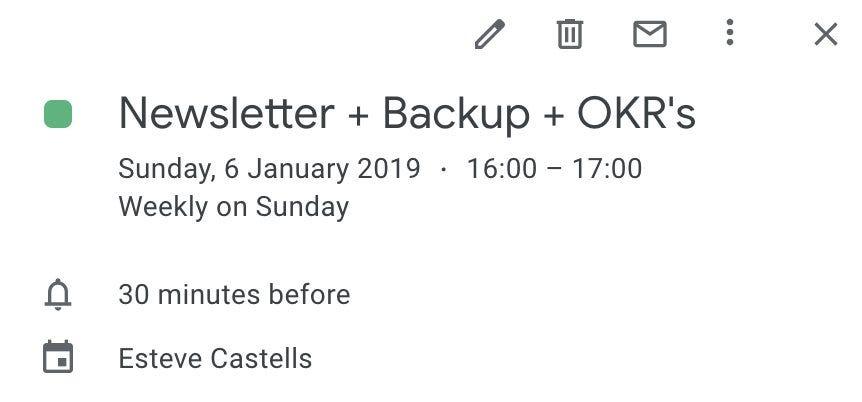
Google Calendar example
Even though it might seem like a complicated and tedious process, it takes me no more than 10 minutes and it increases my productivity and focus incredibly.
This year (2018) I'll close all my OKRs with an 80% average completion rate. They say it's acceptable to close an objective with at least 70% (I closed it at 71%).
I encourage you to use this methodology to make your 2019 a great year on all levels and not fall once again into resolutions that nobody keeps.
Thread 2 (12/31/2019)
92% of New Year's resolutions and goals fail.
If you're thinking about what yours will be for 2020, let me explain how I apply the OKR methodology to not waste the time invested and actually follow through. This year with a TEMPLATE to get started in 30 seconds.

OKR: what it is and how to implement the methodology in your company
If you're new to this, I recommend going back to last year's thread to catch up on basic concepts and explanations that I'll take for granted here to avoid repeating myself in the V2.
The idea is always to apply the KISS principle (Keep It Simple, Stupid!) to these things. If you feel that OKRs are too much, as @rtayar and @cesiztel suggested last year, you can use SMART criteria to start.
How to create SMART goals for your company
OKRs are used with varying degrees of success at a business level, but at a personal level they make even more sense if used properly.
Beyond what I shared last year, this year I'm updating you with two changes I've made to improve the methodology and how they affect V2.
These are two changes based on the main problems I've encountered:
- The OKRs themselves that I created
- Actually following through on them
Let's go!
1) The OKRs themselves that I created
Last year I defined OKRs that weren't real objectives.
They were goals I had already achieved but needed monitoring to maintain the habit — this happens when you've been using this for several years.
To fix this...
...inspired by the Health Metrics applied in the business world, I adopted something similar.
How to use it?
Example
OKR: I weigh 70kg and want to get down to 60kg Health Metric: I already weigh 60kg but want to maintain that weight, and if I gain weight, I take action
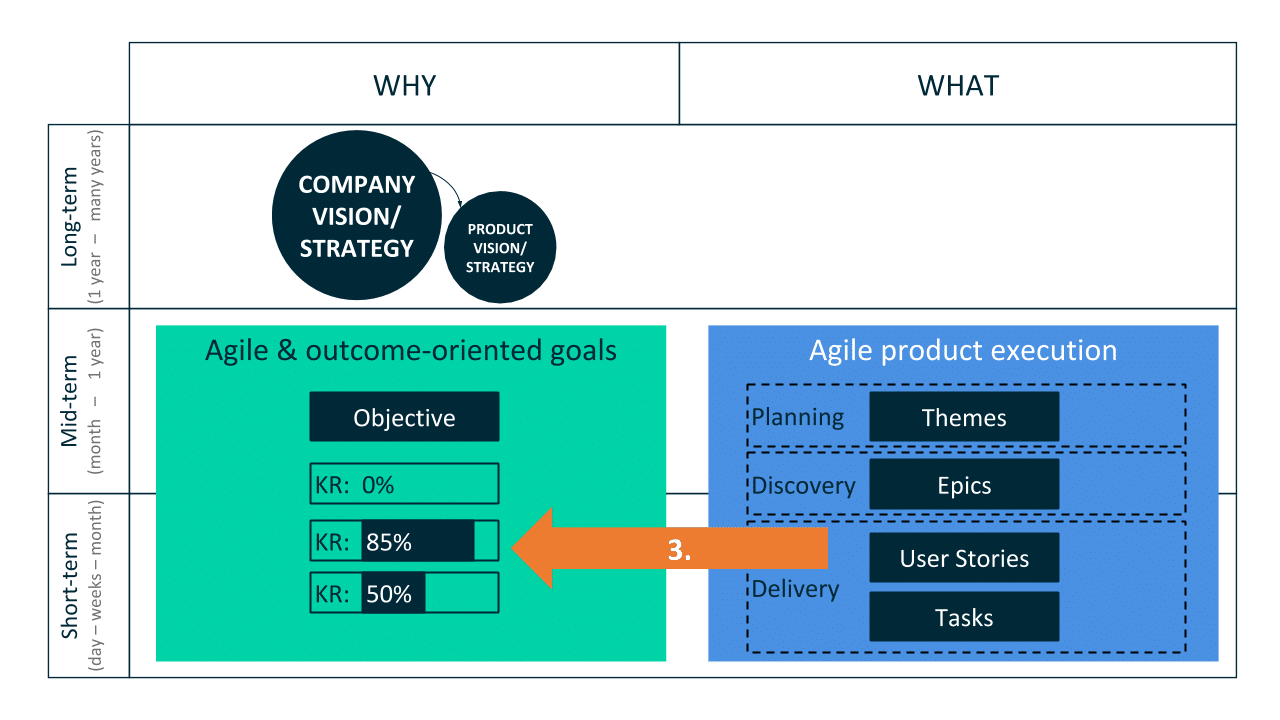
How to use Objectives and Key Results (OKR) in Product Management?
With Health Metrics we can monitor metrics that are equally or more important than objectives, but that don't necessarily require additional action beyond what we should already be doing.
Ideal for advanced OKR users who want to take it to the next level.
2) Actually following through on them
I'm a fairly consistent person and it's never been hard for me to keep up with the weekly updates.
But it is hard to find time to modify them, since they're annual and can evolve over time — you need to be flexible with your priorities.
For this, I created, inspired by the rituals of the PEAK methodology used by @AdevintaSpain (thanks @gianpa for teaching us this!), the "Quarterly Lessons."
What are "Quarterly Lessons"? It's an afternoon of focus dedicated to thinking about OKRs: whether they still make sense, how they're evolving, what needs to change...
I do it the last Sunday of the month, every three months, starting in March. (+Google Calendar to remind me)
When you receive a lesson, you should learn something. In this lesson, you're both the teacher and the student, and the goal is to learn about yourself, your evolution, and what you need to change.
Thanks to Quarterly Lessons, we can set aside time for ourselves. To think, to reflect.
As the great Warren Buffett says: "I insist on a lot of time being spent, almost every day, to just sit and think."
Now that you have the puzzle of concepts laid out for defining your goals, let me show you how to use the template.
For this, I've made a presentation where I explain each element step by step.
Presentation:
Once you've got it figured out, here's the template to start using it.
P.S.: (Make a copy and customize it to your liking)
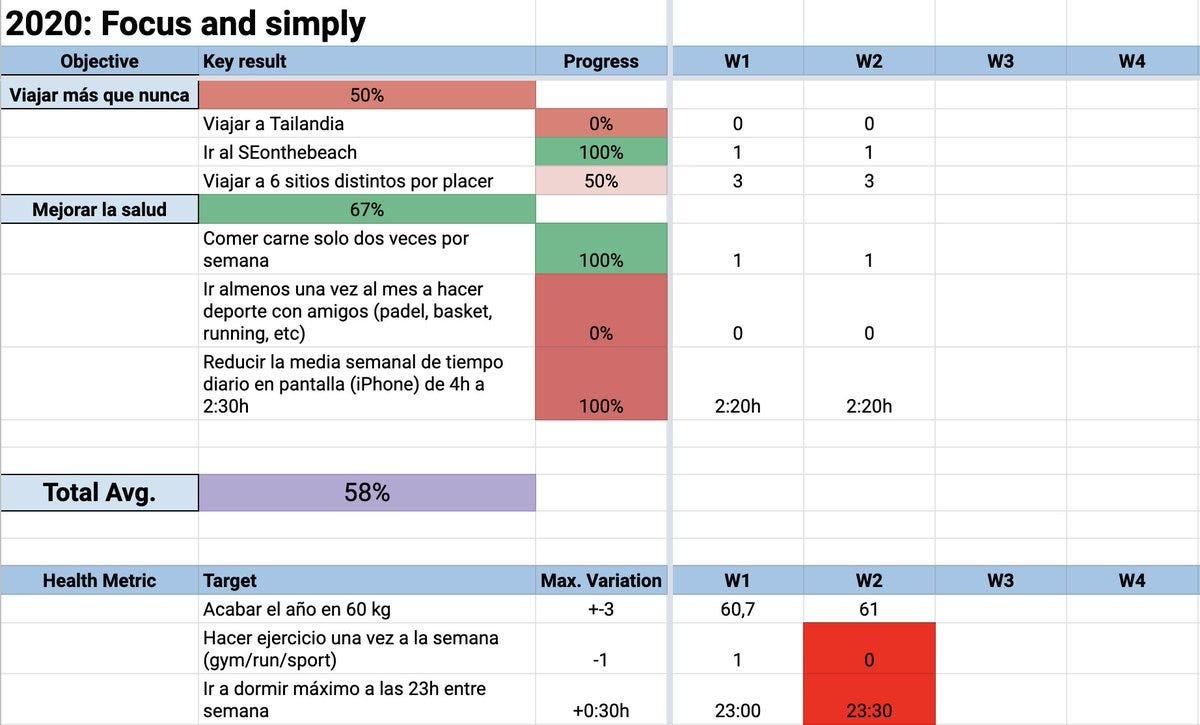
Google Sheets:
Following last year's thread, dozens of people started using the methodology (maybe it's time to give it a fancy name, perhaps next year).
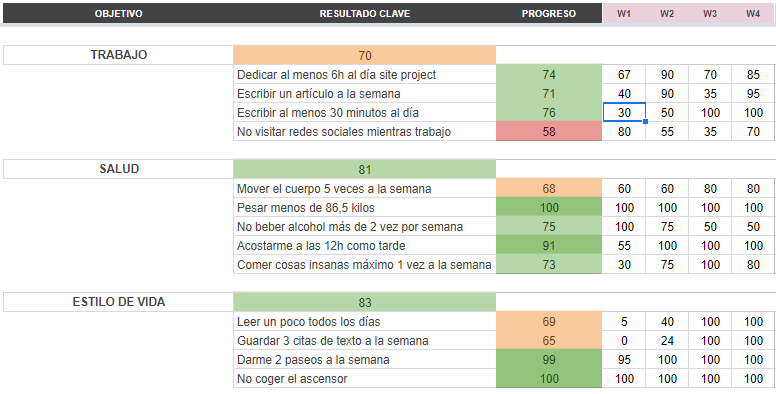
Here's one of the best usage examples I've seen from one of the newsletter readers, @CharlyMJ_.
Charly has not only successfully applied OKRs to his daily life as you can see in the image, but he's also written an article simplifying the methodology so that "even my mother could use it."
If you're not convinced, you can define them like @david_bonilla did on his blog: publicly and concretely, without so much detail.
OKRs should be something extremely flexible, especially in the personal realm, so if something doesn't fit, change it!
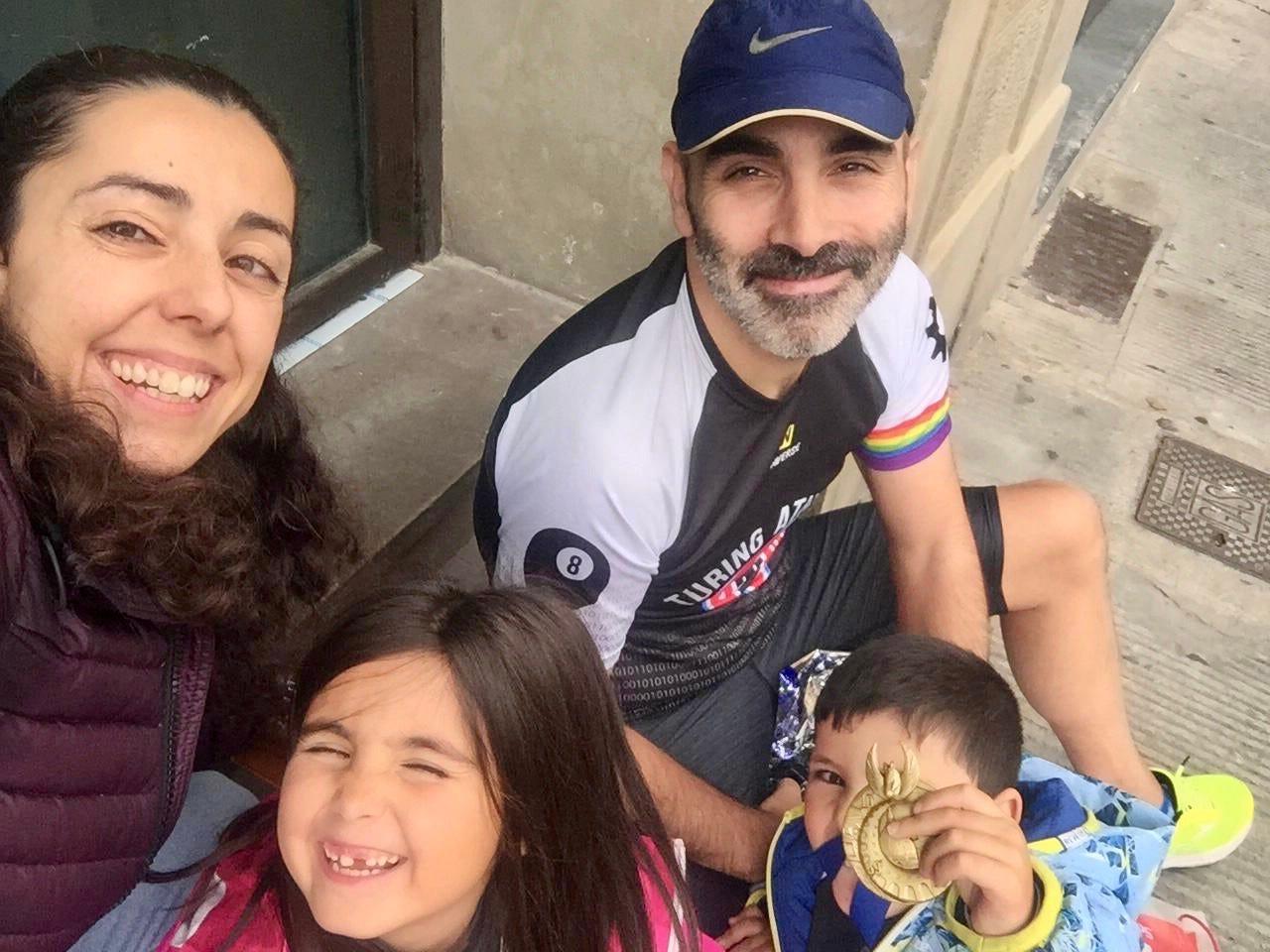
Goals for 2020 by David Bonilla
Let's bring that 92% way down!
This methodology isn't for everyone, but if it resonates with you, give it a try and you'll see that if you follow through, it transforms your productivity and focus.
Thanks for reading. And... Happy 2020!