In the evolving landscape of AI-generated imagery, tools like DALL-E, MidJourney, and Stable Diffusion are making significant strides. One notable development is the inclusion of metadata in the images they produce. This metadata can be detected by image processors, revealing the origins of these images. Platforms like Facebook are already beginning to display this information.

Understanding Image Metadata
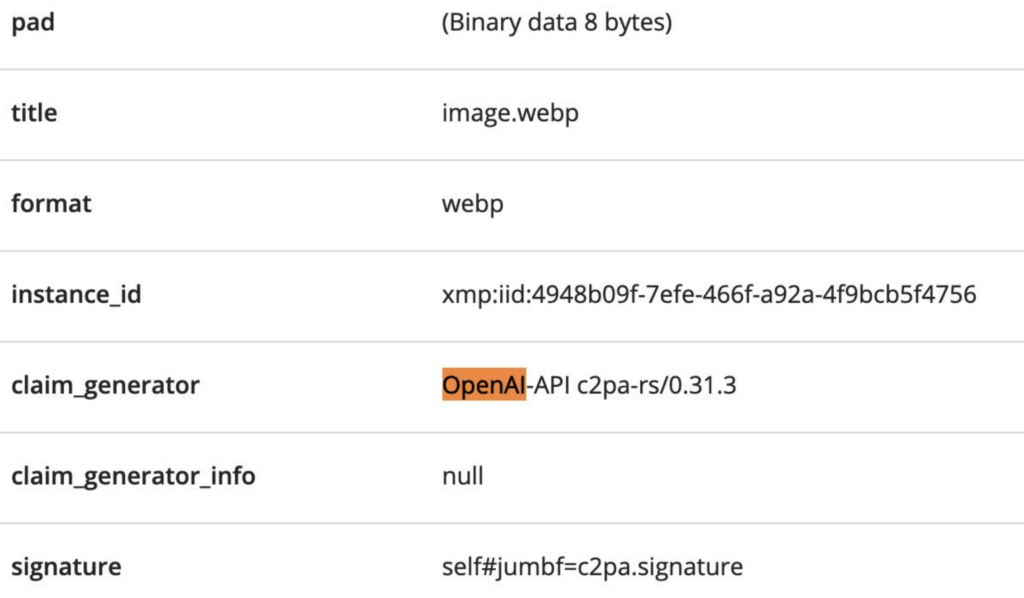
Metadata in images works similarly to the ‘head’ section in HTML. It provides essential information about the image, including its source. For instance, images generated with DALL-E via ChatGPT clearly attribute their origin to OpenAI in their metadata.
You can see the OpenAI metadata here:
The Need to Remove Metadata
Given the ease with which anyone can view image metadata, and the potential for platforms like Google to use this information to identify AI-generated content, the presence of metadata could possibly negatively impact SEO efforts, either now or in the future. Social media platforms like Facebook may also leverage this data to discriminate against AI-generated content at scale. After all, any way to filter out things is likely to be used by these platforms in their content management efforts.
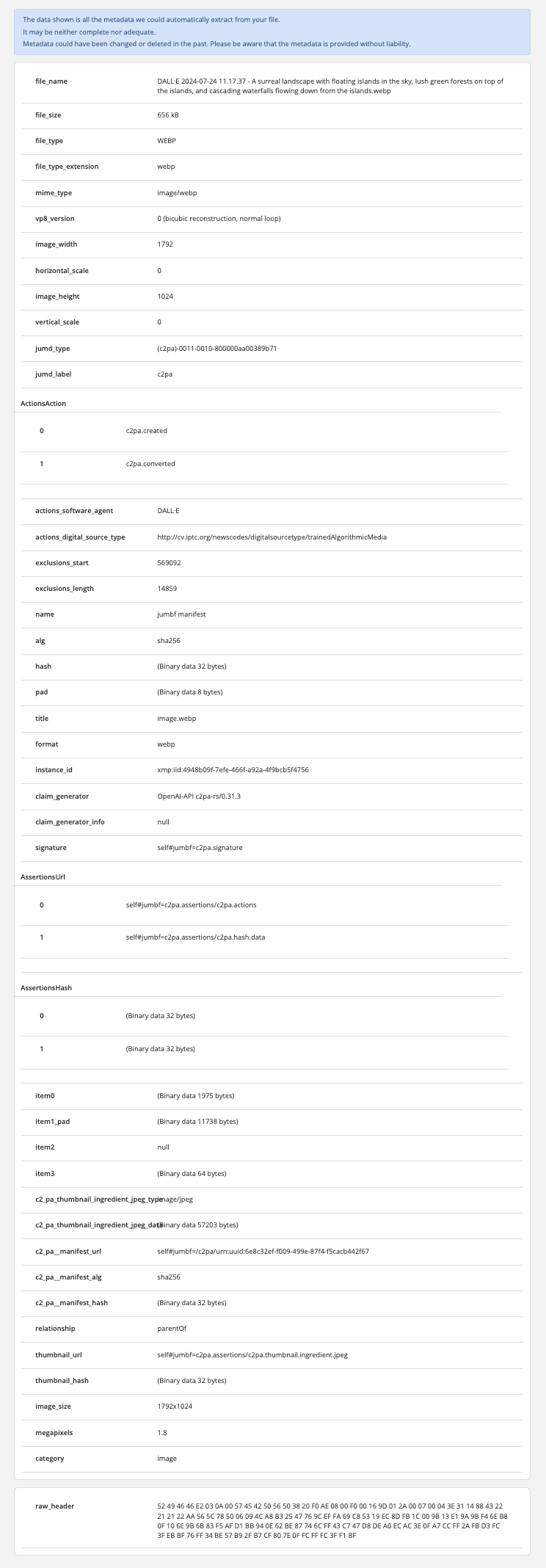
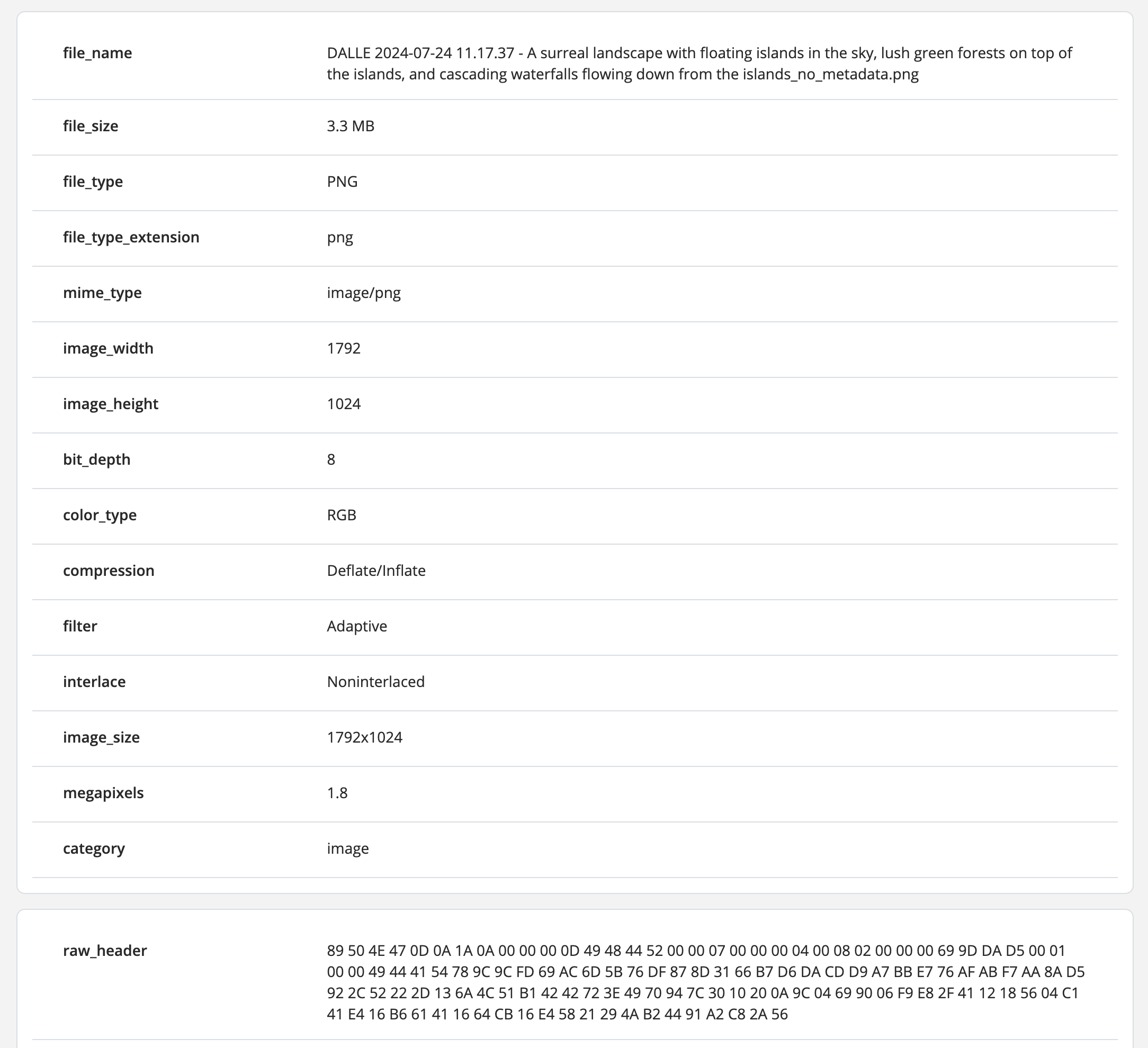
Back then, I built a tool designed to remove embedded metadata from images, including EXIF, IPTC, and XMP information. What it could remove depended on the image format. I later retired the tool.
Before:
After:
Why This Matters
The metadata-removal tool described here has since been retired. To inspect or remove embedded metadata before sharing an image, use an image editor or metadata utility and check the exported file. Available options vary by tool and file format.